
Services
Industrial robotics: integration and service
Vanguard Systems integrates robotic cells in French-speaking Switzerland, from engineering through production start-up and maintenance. FANUC is our main platform; other brands are considered for each project.
Our approach
What we actually do
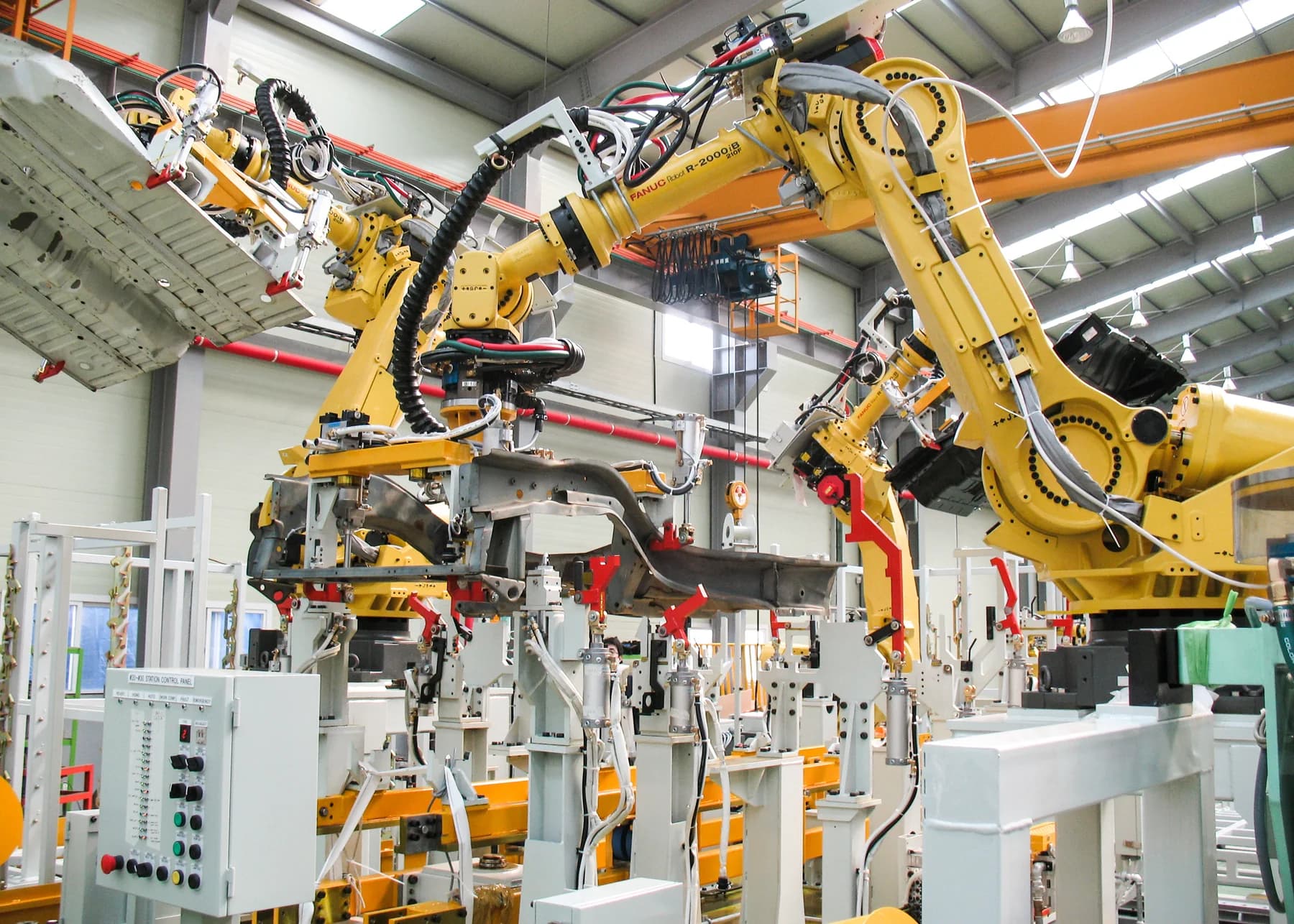
Vanguard Systems integrates robotic cells in French-speaking Switzerland, from engineering through production start-up and maintenance.
FANUC is our main platform; other brands are considered for each project. A project manager coordinates the requirements, engineering, suppliers, implementation and testing.
We handle robot programming, automation and interfaces with your machines. Grippers, vision, conveyors, mechanics, electrical work and safety form part of the project, with the required specialists identified in the proposal.
You have one point of contact for a new cell, a robot added to an existing line or modifications to an installed system.
Our expertise
Project management
Project management: requirements, specifications, budget, schedule, supplier coordination and decision tracking through to acceptance.
Feasibility study
Feasibility study: parts, payload including the gripper, reach, throughput, accuracy, footprint and production constraints. Trials on representative parts where the process requires them.
Equipment selection and supply
Equipment selection and supply: primarily FANUC robots, plus grippers, sensors, vision and peripherals. Other brands are assessed against the installed fleet, application and resources required.
Cell design
Cell design: layout, operator and maintenance access, part flow, supports, guarding and interfaces with existing equipment. Coordination of mechanical and electrical implementation.
Grippers and peripherals
Grippers and peripherals: specification and integration of grippers, vacuum systems, tool changers, fixtures, conveyors and part feeding to suit the application.
Robot programming
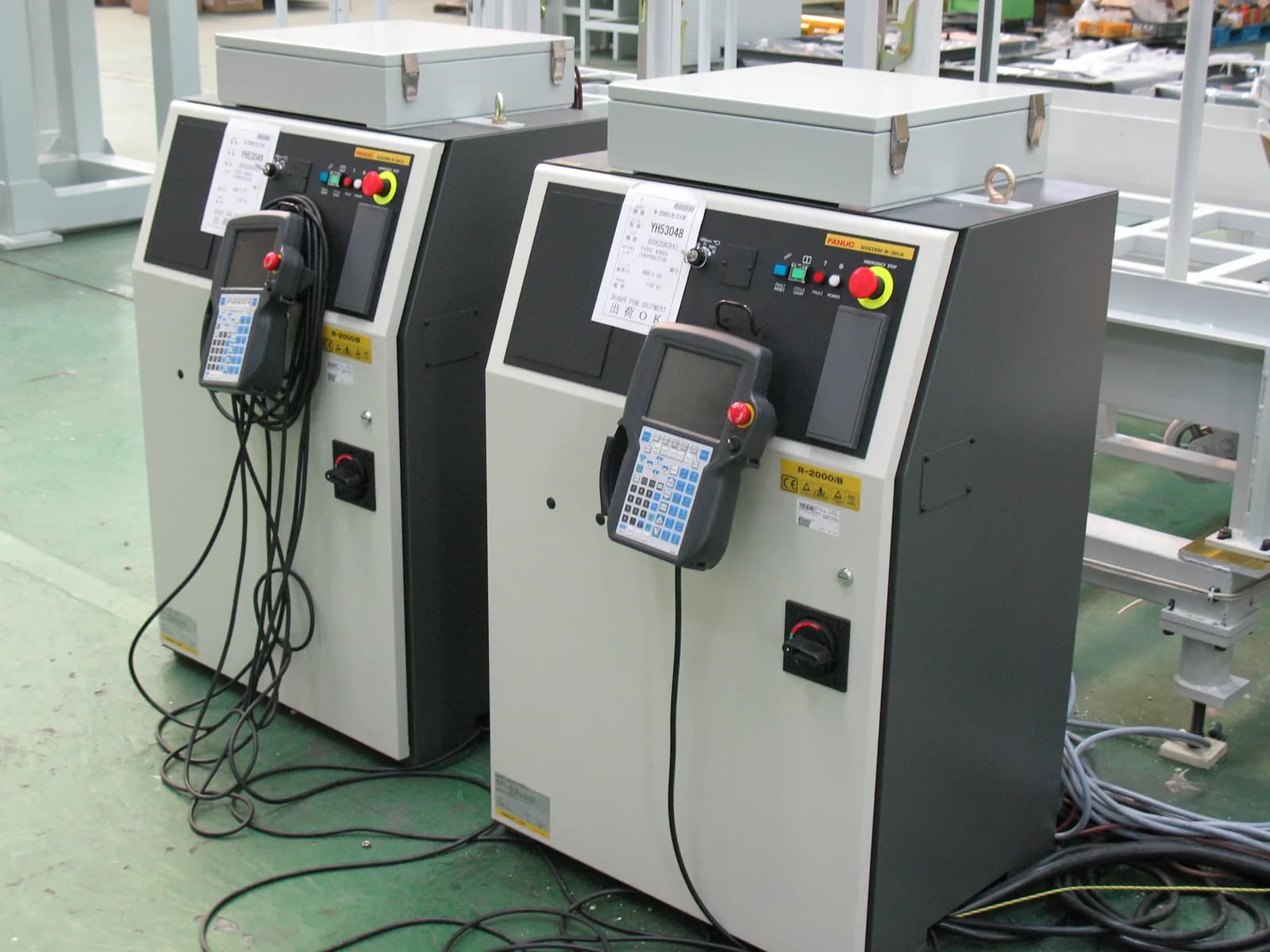
Robot programming: frames, tools, paths, sequences, recipes, product changeovers, fault handling and restart procedures.
Automation and interfaces
Automation and interfaces: PLC/HMI programming, robot-machine communication, peripheral synchronisation, alarms and connection to site supervision or traceability systems.
Vision and inspection
Vision and inspection: assessment of part picking, positioning and in-cycle inspection. Lighting, cameras and trials are specified for the parts and required tolerances.
Cell safety
Cell safety: risk assessment, specification of guarding and safety functions, integration and documented testing. The validation scope and responsibility for the conformity documentation are defined before implementation.
FAT/SAT and commissioning
FAT/SAT and commissioning: test protocols, testing at the builder and on site, interface checks, outstanding-item tracking and production start-up against agreed acceptance criteria.
Training and documentation
Training and documentation: operator training, product changeovers, first-line diagnostics, restart procedures, technical documentation and program backups within the agreed scope.
Maintenance and troubleshooting
Maintenance and troubleshooting: preventive plans, checks against manufacturer recommendations, robot and peripheral diagnostics, recurring fault analysis and coordination of repairs or required parts.
Modifications and retrofit
Modifications and retrofit: adapting to a new part, program changes, gripper replacement, added vision, interface changes or cell relocation after assessing the existing installation.
Technologies
Use cases and references
Technologies used:
Technologies used:
Technologies used:
Technologies used:
Frequently asked questions
Can you manage the complete robotics project?
Yes. A project manager coordinates engineering, equipment, integration, programming, testing and commissioning. We also coordinate mechanics, electrical work, grippers and the required specialists. The proposal defines our work packages, interfaces with your teams, deliverables and acceptance conditions. We can also handle a single phase or support a machine builder.
Do you only work with FANUC robots?
FANUC is our main brand for robot integration. We also assess projects using other robots, depending on the application and your installed fleet. The controller, software versions, licences, access and required skills are checked before we confirm an intervention.
Can you add a robot to an existing line?
Yes, after assessing the machine and its interfaces. We check PLC communication, cycle times, part presentation, available space, access and the safety of the combined system. Engineering identifies the required modifications and tests before production start-up.
How do you handle cell safety and conformity?
Safety is assessed for the complete cell: robot, tool, part, associated machines and human interventions. The risk assessment determines guarding, operating modes and the required tests. The proposal defines who designs and validates safety functions, who prepares the documentation and who is responsible for placing the combined system on the market. The robot's own documentation is insufficient to validate an integrated cell.
Do you provide maintenance and troubleshooting after commissioning?
Yes. The scope can cover preventive maintenance, diagnostics, program corrections, peripheral repairs and recurring fault monitoring. Internal robot repairs, parts and specialist work are arranged according to the diagnosis, manufacturer recommendations and available resources, with the manufacturer or a specialist where needed. Service hours and response times are agreed in the proposal or contract. Remote access must be authorised and secure.
What documentation and training are included at handover?
The proposal specifies the technical documentation, drawings, backups, test reports, operating instructions and maintenance plan to be delivered. Training covers operation, product changeovers, alarms and restart procedures for the roles in your teams. Licences and software access rights are defined before handover.
How do you price a robotic cell?
We quote after scoping the project. Engineering, equipment, mechanics, electrical work, programming, safety, testing, commissioning, training and the requested service are itemised. To start, provide the task, part sizes and weights, target throughput, available drawings and line constraints. Performance and budget are confirmed through engineering and the required trials.
Contact
A project to scope out?
Tell us about your need and your timeline constraints. We come back quickly with a clear scope.